
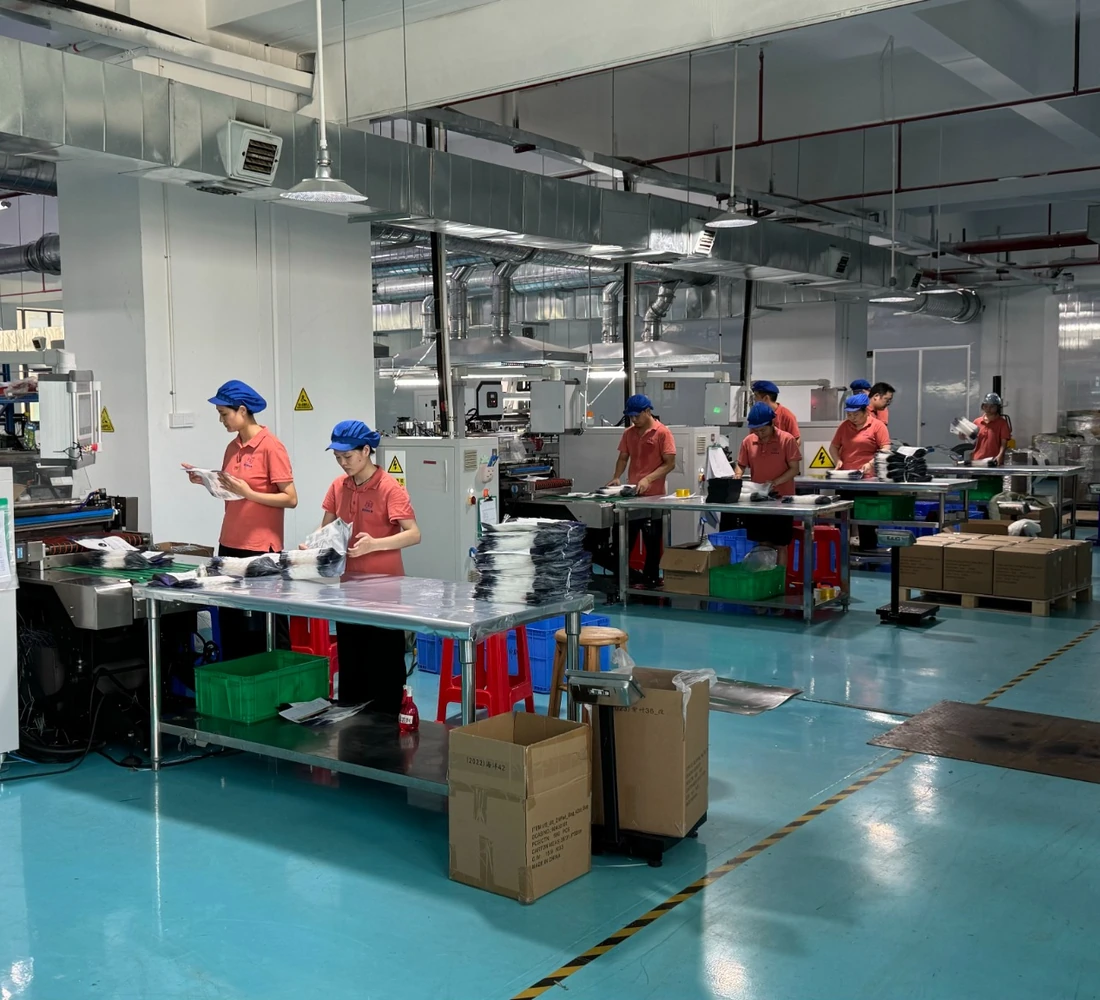
1. Material and artwork review
The process begins with a review of the product, package format, dimensions, material requirements and artwork. The team checks the print layout, repeat, color requirements, seal areas, zipper or spout positions and other functional details.
Clear specifications at this stage help reduce avoidable changes later in production.
2. Printing
Flexible packaging graphics may be produced using processes such as gravure or digital printing, depending on the job, artwork, quantity and schedule. Color targets, registration and print appearance are checked against the approved reference.
The print method and production plan should be selected according to the project requirements rather than assuming one method is best for every order.
3. Lamination and curing
For laminated structures, layers are bonded using an adhesive system selected for the material combination and intended application. The laminate then follows the required curing conditions before downstream converting.
Material compatibility, adhesive selection and process control are important considerations, especially for packaging intended for food contact.
4. Slitting and pouch making
Laminated rolls are slit to the required width. Depending on the order, the film may remain as rollstock or move to pouch making. Pouch converting can include forming, sealing, cutting and adding features such as zippers, tear notches or spouts.
Dimensions, seal geometry and machine compatibility should be confirmed against the approved specification.
5. Inspection and release
Inspection plans may cover print appearance, dimensions, seals, workmanship, roll condition and other agreed specifications. The appropriate checks depend on the product and customer requirements.
A documented approval process and clear retained specifications help maintain consistency between samples and production orders.