
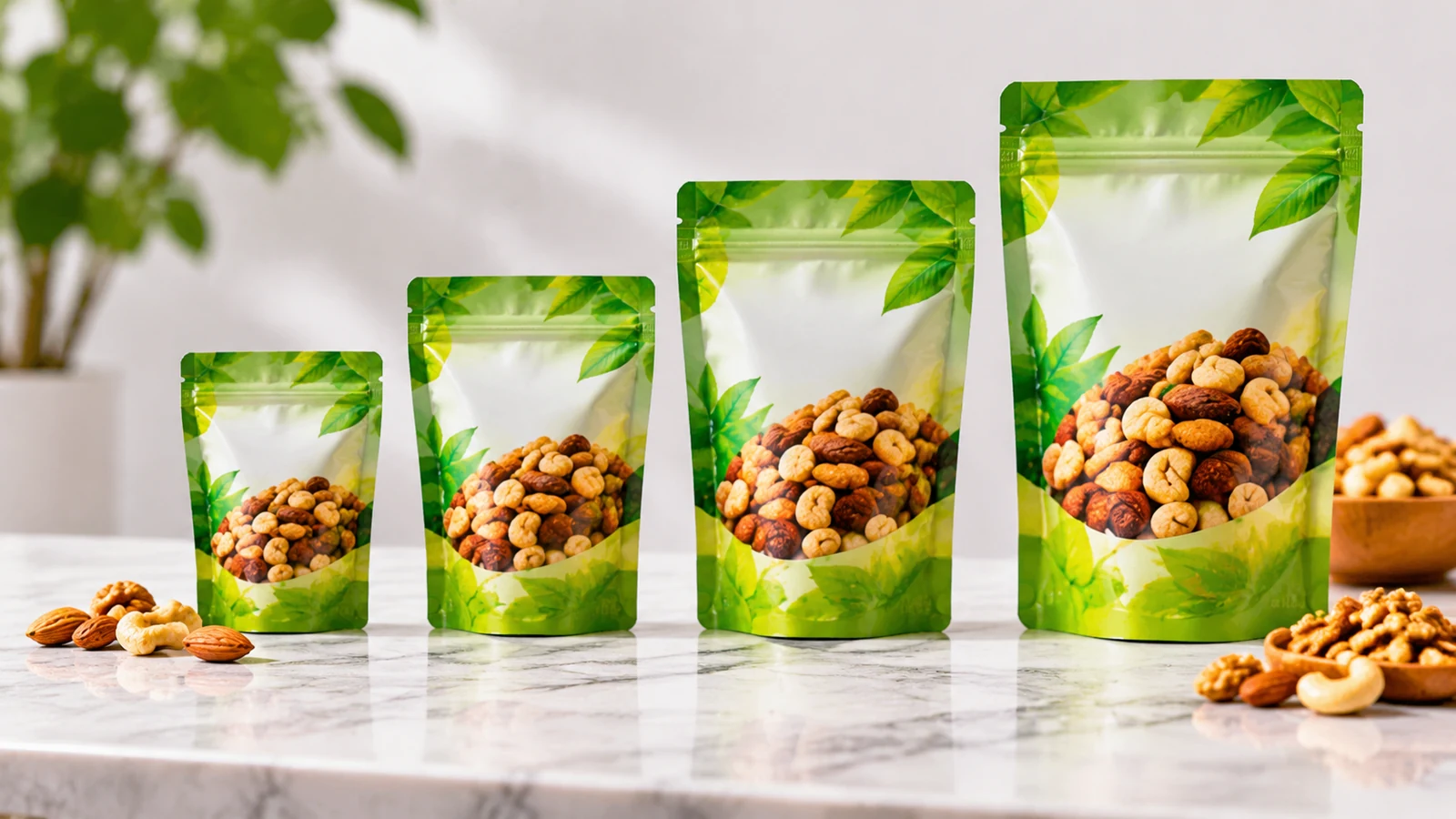
Stand-up pouch dimensions and estimated capacity
Dimensions are commonly written as width × height × bottom gusset. The gusset is the opened depth of the pouch base. The examples below are for planning; suppliers may offer different dimensions and capacity estimates.
| Example size (W × H × gusset) | Approx. dimensions (mm) | Estimated usable volume | Example uses |
|---|---|---|---|
| 3.25 × 4.75 × 2 in | 83 × 121 × 51 mm | 150–200 mL | Samples, tea, seasonings |
| 4.375 × 6 × 2 in | 111 × 152 × 51 mm | 280–380 mL | Coffee, tea, small snacks |
| 5 × 6.5 × 2.5 in | 127 × 165 × 64 mm | 480–650 mL | Nuts, dried fruit, granola |
| 6.5 × 8 × 2.5 in | 165 × 203 × 64 mm | 820–1,100 mL | Coffee, powders, snack mixes |
| 6.75 × 8.5 × 3.5 in | 171 × 216 × 89 mm | 1,375–1,850 mL | Larger snack or pet-treat packs |
| 8.125 × 10 × 3.5 in | 206 × 254 × 89 mm | 2,000–2,725 mL | Family-size and bulk products |
These are dimensional planning examples, not Fuhehu stock sizes. Estimated volume does not convert directly to product weight; actual capacity changes with product density, pouch construction, zipper placement, seal area and headspace.
How to read pouch dimensions
Width is measured across the front panel, height from the bottom edge to the top edge, and the bottom gusset is the full opened depth of the base. Confirm each supplier’s measurement convention before comparing quotations. The listed height includes the top sealing area, while a zipper, seal width and required headspace reduce usable filling space.
Why fill weight varies
A pouch that holds a given volume of coffee may hold a different weight of nuts, powder or dried fruit. Product shape, settling and packing method also affect the fill. Use volume to shortlist sizes, then test the actual product.
How to confirm your size
- Measure the target quantity of product by volume.
- Shortlist two or three pouch sizes.
- Fill samples with the real product using the intended process.
- Check zipper clearance, seal area, pouch stability and shelf presentation.
- Confirm the final dimensions and material structure with your packaging supplier.
For a step-by-step selection process, read How to Select the Right Pouch Size and How to Choose the Right Stand-Up Pouch.
Planning a custom stand-up pouch?
Share your product, target fill weight, dimensions and packing process to discuss a format made for your project.
Explore Custom Stand-Up Pouches →